Foundation Crack Assessment
Basement Crack Repair for Water Entry and Wall Damage
Describe the crack and any moisture you have seen so an independent local contractor can follow up. Get a Free Estimate
A crack in a basement wall can be a route for water, a sign of ordinary material shrinkage, or an indication of movement that deserves closer attention. The appearance alone does not always reveal the cause. Vertical cracks, horizontal cracks, stepped cracks in blockwork, and cracks that change over time can point to different conditions, so the location and pattern matter.
We pass basement crack repair requests to independent local contractors. The contractor contacts you, assesses the crack and surrounding conditions as appropriate, explains the repair options, and provides an estimate. If there are signs of significant movement, bowing, or structural distress, ask for a suitable structural evaluation rather than assuming that sealing the visible opening will address the underlying issue.
The correct repair depends on the foundation material, crack dimensions, water conditions, and whether the structure appears stable. The contractor should explain the purpose and limitations of the selected repair.
Some cracks allow water to enter during wet weather. A contractor may consider a compatible injection or sealing method when the crack and surrounding structure are suitable for that approach.
Cracks that follow mortar joints or pass through concrete blocks need to be evaluated in context. The contractor may inspect nearby joints, wall alignment, and signs of moisture or movement before selecting a repair.
These patterns can sometimes be associated with soil pressure or movement. Where the wall is displaced, bowing, or changing, the priority is to assess structural stability rather than treat the opening as a simple leak.
A crack that leaks again after a previous repair may need further investigation into water pressure, repair compatibility, or continued movement. Sharing information about earlier work can help the contractor understand what has already been tried.
You can explain whether the crack is dry, damp, actively leaking, or visibly changing. We pass those details to an independent local contractor.
The contractor evaluates the material and crack pattern before deciding which repair, if any, is appropriate.
The contractor explains the proposed repair and estimate directly, allowing you to ask questions before agreeing to the work.
Share the crack's location and whether it leaks or appears to be changing. We will pass your request to an independent local contractor.
Free — no obligations
Describe which wall is affected, where the crack begins and ends, and whether moisture is present.
We pass your information to an independent local contractor for follow-up.
The contractor examines the crack, surrounding masonry, water entry, and any signs of movement.
The contractor explains whether a sealing repair is suitable or whether further structural evaluation is warranted.
Review the written proposal, including the method, limitations, and any applicable warranty terms before approving the work.
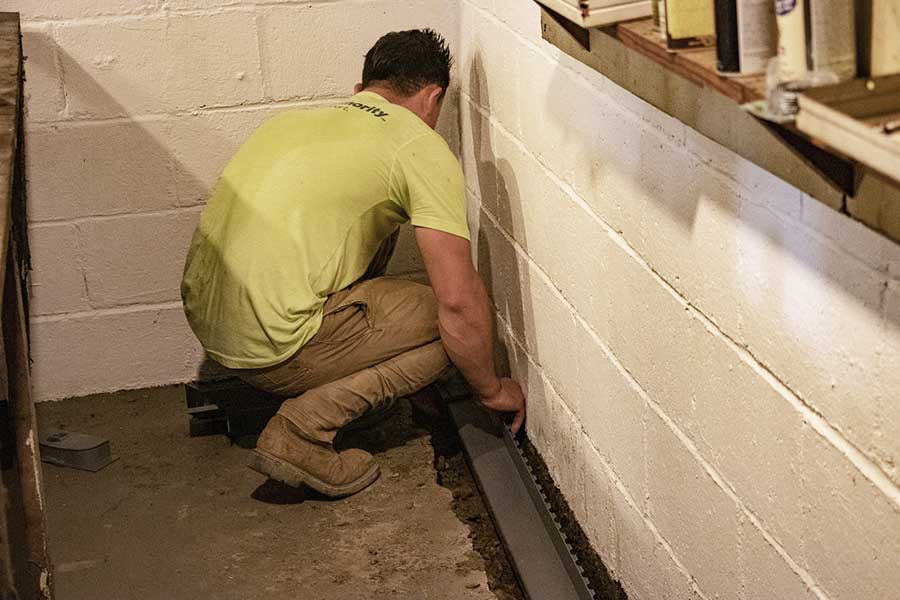
Some cracks can be treated from the interior using a suitable injection or sealing method. Whether that approach is appropriate depends on the crack, the wall material, and whether movement or outside water pressure is involved.
A horizontal crack can indicate pressure or movement, particularly when accompanied by wall bowing or displacement. Any crack that is widening, shifting, or associated with structural changes deserves prompt professional evaluation.
Water pressure, an incompatible repair, continued movement, or another nearby entry point may contribute to recurring moisture. The contractor should investigate why the earlier repair did not resolve the problem before recommending another treatment.